Fused deposition modelling
FDM 3D Printing in London
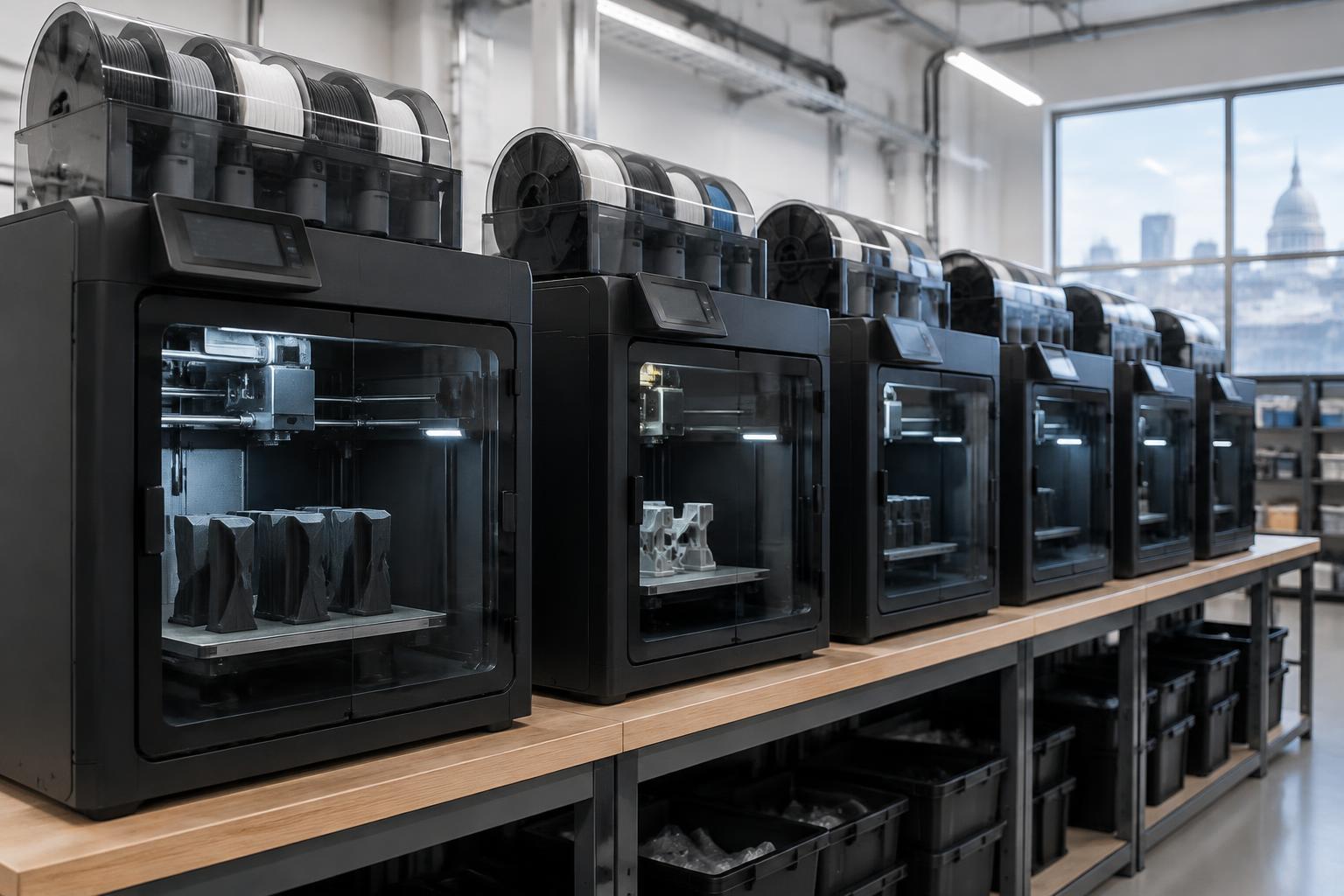
FDM builds parts by extruding thermoplastic filament layer by layer. It's cost-effective, versatile and ideal for larger or functional parts where strength matters more than fine surface finish.
Functional prototypes
Test fit, form and function with parts made from real thermoplastics that can be drilled, tapped, assembled and handled.
Larger parts
Bigger build volumes make FDM a practical choice for enclosures, brackets and components that would be expensive or impractical in resin.
Production aids, jigs and fixtures
Custom jigs, assembly fixtures, holders and tooling aids help workshops and production lines work faster at a fraction of machined cost.
Suitable materials
We work with a range of common filaments such as PLA, PETG and tougher engineering grades. See the materials page for current options — we'll advise on what fits your application.
Commercial use
FDM scales well for repeat parts, short runs and business customers who need dependable components delivered on schedule.
Well suited to
- +Functional prototypes
- +Enclosures and brackets
- +Jigs and fixtures
- +Large-format parts
- +Low-volume end-use parts
Things to consider
- –Visible layer lines, especially on curved surfaces
- –Fine detail is lower than resin
- –Parts are typically weaker between layers than along them
- –Cosmetic finishing adds time where a smooth surface is required
Common questions
How strong are FDM parts?
It depends on the material, orientation and infill. We'll set these based on how the part will be used.
Can FDM parts be used as end-use parts?
Often, yes — especially for fixtures, housings and low-volume components. Tell us the application and we'll advise.
Related services
Resin 3D Printing
High-detail SLA and MSLA printing for miniatures, models and fine-featured prototypes.
Prototype Printing
Concept, appearance and functional prototypes to move your design forward quickly.
Miniature & Model Printing
Tabletop miniatures, gaming models and display pieces printed with specialist care.
Send us your part. Get a price.
Upload an STL, STEP or 3MF file and our London production team will come back with pricing, material options and a realistic lead time.